
Indoor days the museums of Bruges
Bruges fits a surprising number of museums into a small centre, which is handy on a grey afternoon and just as tempting on a sunny one. Guests regularly ask us which one to pick, so we have grouped them the way we explain them at the door: art, history and experience, and the ones that work well with children.
For the art
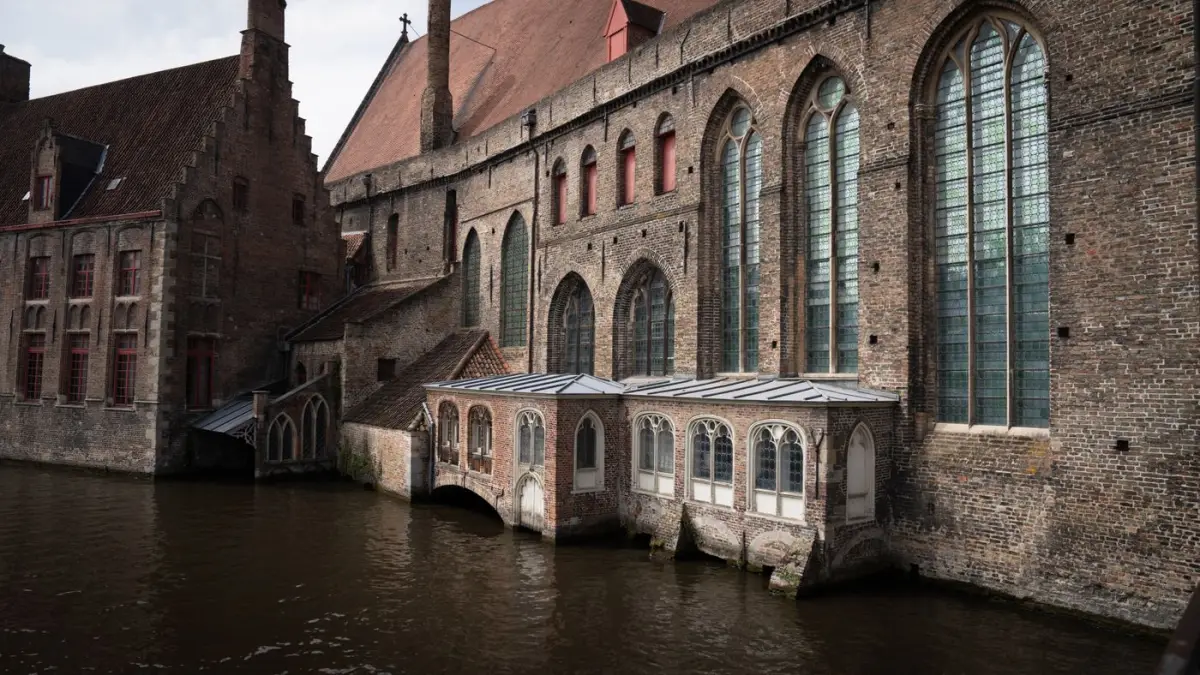
The Groeningemuseum holds the city art collection and is the one we mention first. It runs from the early Flemish masters, painters who worked in Bruges when the city was at its wealthiest, through the centuries to modern Belgian work. Even a short visit gives you a sense of why those small, precisely painted panels still draw people here.
The Arentshuis sits close by in a quiet townhouse. The upper floor is given over to the work of Frank Brangwyn, an artist born in Bruges who built his career in Britain, while the rest of the house is used for changing exhibitions. It is small, which is exactly the point after a big collection.
For the history
The Gruuthusemuseum is set in the mansion of the Gruuthuse family, who were part of the city's Burgundian upper class. The house itself is half the story, with its rooms, tapestries and lace, and it explains how Bruges lived and traded through several very different centuries.
The Historium takes another approach and reconstructs the city at the height of its trading days as a walk through experience, with a tower you can climb for a view over the Market Square. It is storytelling rather than a collection, which some visitors love and others find a little theatrical, so it helps to know that in advance.
With children
Choco-Story tells the story of chocolate from cocoa bean to the shops you walked past on the way in, and it usually ends with something to taste. The Frietmuseum does the same for the potato and for Belgian fries, in a medieval building near the centre.
The Diamantmuseum covers the trade that once ran through Bruges and demonstrates how a stone is cut and polished. All three are compact, indoor and easy to combine with lunch, which matters when legs are tired.
The quieter ones
Two smaller museums are easy to overlook. The Volkskundemuseum, laid out in a row of old almshouses, shows how ordinary people in this region lived and worked, with old trades and interiors set up room by room.
The Gezellehuis is the house where the poet Guido Gezelle was born. Even without reading his work in Dutch, the house and its garden make for a calm half hour away from the busiest streets.
Before you go
- Opening hours and closing days change through the year, so check the museum's own website the evening before
- Several museums are run by the city and share combination tickets, which is worth looking into if you plan more than one
- Popular museums are busiest in the middle of the day, so early or late is usually calmer
- Ask us for the current situation, we hear from guests every week what the queues look like
Practical, from the apartment
- Most museums are in the historic centre, 1.9 km from us, roughly 20 to 25 minutes on foot
- By bicycle you are in the centre in a few minutes, with rental bikes available at the building
- Free parking is a two minute walk away, so you can leave the car and travel in on foot
- A museum day combines well with a walk back along the Damme Canal in the evening